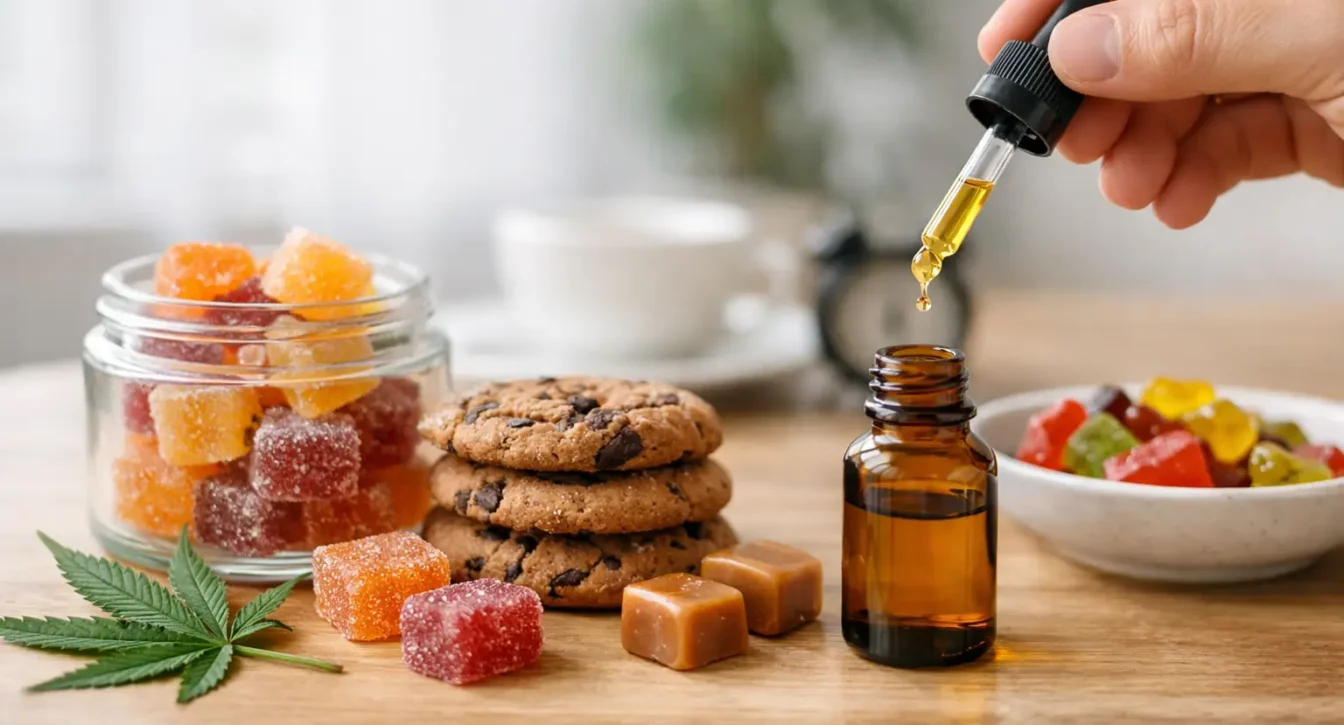
You feel nothing at 30 minutes, so you take more. Then the first dose finally kicks in, and now the night has gone sideways. That single mistake explains why so many people want to understand how edible dosing works before they try gummies, chocolates, drinks, or baked products.
Edibles are not like smoking or vaping. The timing is different, the body processes them differently, and the same milligram amount can feel mild to one person and very strong to another. If you want a smoother experience, the goal is not just picking a number off the package. It is knowing what affects onset, intensity, and duration so you can make a smarter call the first time.
How edible dosing works in the body
When you eat cannabis, the THC does not go straight from your lungs into your bloodstream the way inhaled cannabis does. It moves through your digestive system and is processed by the liver. During that process, delta-9 THC is converted into 11-hydroxy-THC, a compound many people experience as stronger and longer-lasting.
That is why edibles often feel deeper, heavier, or more full-body than smoking. It is also why timing can be tricky. You may not feel much for 45 minutes, 90 minutes, or even longer depending on the product and your body. By the time people think, “This edible is weak,” it may just be early.
This delayed onset is the main reason dosing mistakes happen. With inhaled cannabis, feedback is fast. With edibles, you are making decisions before the full effect is clear.
Why the same edible dose hits people differently
If two adults each eat 10 mg of THC, they may have completely different experiences. One may feel relaxed and social. The other may feel too high, sleepy, or anxious. That difference does not mean one product is bad or one person is doing it wrong. It means edible dosing depends on several moving parts.
Body size plays a role, but not as much as people assume. Tolerance matters more. Someone who uses cannabis regularly may need more THC to feel the same effect as someone who only uses it occasionally. Metabolism also matters. So does whether you ate before taking the edible.
A full stomach can slow the onset, but it may also make the ride feel steadier. Taking an edible on an empty stomach can bring effects on faster for some people, but it can also feel more intense and less predictable. Product type matters too. A gummy, a drink, and a baked edible may all absorb a little differently.
There is also the question of what else is in the product. THC paired with CBD may feel more balanced for some users. Minor cannabinoids and terpenes can shape the overall feel as well, though they do not erase the impact of taking too much THC.
A practical starting point for edible dosing
For most people, low and slow still works because it solves the biggest edible problem: impatience. If you are new, or getting back into cannabis after a break, 2.5 mg to 5 mg of THC is a reasonable place to start.
For some adults, 2.5 mg is enough for a gentle shift in mood or body comfort. Five milligrams is a common beginner dose, but it is not automatically light for everyone. Ten milligrams is often treated like a standard serving in legal markets, but for a low-tolerance user, it can be a lot.
If you already use cannabis regularly, your starting point may be higher. Even then, adding more should be deliberate, not rushed. Waiting at least two full hours before increasing is a smart baseline, and with some products, waiting longer makes sense.
The best approach is simple. Start with a dose you are confident you can handle, not the dose you hope will impress you. You can always take more next time. You cannot fast-forward through an edible that came on too strong.
Reading the label without getting fooled
One of the easiest ways to overdo edibles is misunderstanding the package. Some products contain 100 mg total, but that does not mean each piece is 100 mg. It might be 10 pieces at 10 mg each, or 20 pieces at 5 mg each.
Always check both numbers: THC per serving and THC per package. That distinction matters. A chocolate bar may look like one item, but each scored square may be the real serving. A beverage may be resealable, meaning one bottle contains multiple doses even if it seems like a single drink.
This is where regulated products have a clear advantage. Accurate labeling gives you a chance to dose with some confidence. If the goal is consistency, guessing is the enemy.
Timing matters more than most people think
A lot of edible advice focuses on milligrams, but timing deserves equal attention. The experience usually comes in stages. First, there is the waiting period. Then the rise. Then the peak. Then the long taper.
Many people feel first effects somewhere between 30 minutes and 2 hours. The peak may not arrive until 2 to 4 hours in. Total duration can last 6 to 8 hours, sometimes longer. That does not mean you will feel equally strong the entire time, but it does mean edibles are not ideal when you want something short and easy to dial back.
That longer arc is helpful for some situations and less helpful for others. If you want sustained effects and do not need fast control, edibles can make sense. If you want quick feedback and a shorter window, inhaled cannabis may feel easier to manage.
Common edible dosing mistakes
The biggest mistake is taking a second dose too soon. Close behind that is starting at a dose based on someone else’s tolerance. Your friend may enjoy 20 mg every weekend and function just fine. That says very little about what your body will do.
Another common issue is mixing alcohol with edibles. That combination can intensify effects and make the experience harder to read. People also run into trouble when they take edibles late at night expecting a quick unwind, only to find the peak arriving when they wanted to be asleep.
Storage matters too. If a product looks like regular candy and is not kept secure, that creates obvious safety problems. Clear labeling and careful storage are part of responsible use, especially in homes with kids or pets.
What to do if you took too much
If an edible hits harder than expected, the first thing to know is that the feeling will pass. That sounds basic, but it matters in the moment. Find a calm place, sit or lie down, sip water, and avoid stacking the situation with alcohol or more cannabis.
Some people find that a light snack and a quiet room help. Others do better with a familiar show, low stimulation, and reassurance from someone they trust. Panic tends to feed the experience. A steady reminder that you are safe and that the effects are temporary can go a long way.
The better fix, of course, is avoiding that situation in the first place. But if it happens, time is usually the main answer.
How edible dosing works for different goals
Not everyone takes edibles for the same reason, so the right dose is not one-size-fits-all. Someone looking for a subtle mood lift may prefer 2.5 mg. Someone using edibles for stronger evening relaxation may land closer to 5 mg or 10 mg, depending on tolerance.
Medical patients may approach dosing with different goals entirely, especially when CBD is part of the plan. In those cases, lower THC with balanced CBD can make more sense than chasing a stronger psychoactive effect. The point is not to copy a chart. The point is to match the dose to the outcome you actually want.
That is where buying from a compliant, clearly labeled source helps. You get a better chance at consistency, and consistency is what makes edible use easier to manage over time.
A better mindset for first-time and occasional users
If you are trying edibles for the first time, do it when you have nowhere to be, nothing important to handle, and no pressure to “feel a lot.” Comfortable setting, familiar people, and a free schedule make a real difference.
For local customers ordering through a licensed service like Dubs Green Garden, that often means planning ahead instead of treating edibles like an impulse add-on. A little patience upfront usually leads to a much better experience later.
The most useful edible habit is not bravery. It is restraint. Start lower than your ego wants, wait longer than your impatience likes, and pay attention to how your own body responds. Once you know that, dosing stops feeling like a gamble and starts feeling manageable.