If you have ever searched for plant-based products and wondered whether a kratom shop is basically the same thing as a dispensary, the short answer is no. Kratom shops vs cannabis dispensaries is not a small difference in branding or store layout. It is a difference in regulation, product oversight, age restrictions, testing standards, and how confidently you can know what you are buying.
That distinction matters even more in California, where licensed cannabis businesses operate under a clear state framework. For adults in Paso Robles and North County who care about safety, consistency, and privacy, understanding the gap can help you make a better decision before you spend money.
Kratom shops vs cannabis dispensaries: the core difference
A cannabis dispensary in California is part of a licensed system. That means the business, products, packaging, testing, and sales process are all tied to state rules. A legal dispensary or delivery service cannot simply buy unverified products, put them on a shelf, and sell them without documentation. There are requirements around age verification, track-and-trace, labeling, child-resistant packaging, and lab testing.
A kratom shop usually operates in a very different category. Kratom is not regulated in the same way as state-licensed cannabis in California. Depending on the seller, products may be marketed as powders, capsules, extracts, or blends, but the oversight can vary widely. Some stores may present themselves professionally, but professional branding is not the same as state compliance.
That is the first thing consumers should know. One business model is built around a formal legal structure. The other may rely much more on the seller’s own sourcing standards and internal claims.
Why regulation changes the customer experience
For most customers, regulation sounds boring until something goes wrong. Then it becomes the whole story.
In a licensed cannabis purchase, there is a paper trail and a compliance trail. Products are expected to be tested for things like potency and contaminants. Labels are supposed to identify what is inside, how much THC or CBD is present, and other required consumer information. That does not mean every customer will have the exact same experience with every product, but it does mean the system is designed to reduce guesswork.
With kratom, consistency can be harder to verify. Two products with similar names may not have the same strength, quality, or composition. In some cases, consumers are relying heavily on the seller’s word. That can be risky if you are trying to make an informed purchase, especially with ingestible products.
For buyers who value confidence over trial and error, that difference is hard to ignore.
Product testing is not a minor detail
One of the biggest practical differences between kratom shops and cannabis dispensaries is lab testing.
In California’s licensed cannabis market, testing is part of the legal process. That includes checks tied to safety and potency before products reach consumers. When someone buys flower, edibles, tinctures, or vapes from a licensed source, they are buying within a system that requires more than a nice label and a promise.
Kratom products do not always come with that same level of standardized oversight. Some manufacturers may do their own testing, and some may not. Some may share detailed results, and others may offer little beyond packaging claims. That puts more burden on the consumer to investigate quality.
For many adults, especially medical-focused consumers, that uncertainty is a dealbreaker. If you are shopping for a product to support a specific routine, predictable labeling matters. So does the ability to buy from a system where compliance is not optional.
Age limits, legal access, and who can buy
Licensed cannabis dispensaries in California have clear rules on age and eligibility. Adult-use cannabis is available to customers 21 and older. Medical cannabis is available to patients 18 and older with a valid recommendation. The process is structured, and the business has to verify identity before completing a sale.
That may sound strict, but strict rules are part of what makes the system dependable. The customer knows what is required. The business knows what is required. There is less confusion.
Kratom retail access can feel less consistent. Rules can differ by state or locality, and the buying environment may not reflect the same kind of tightly enforced standards customers see in licensed cannabis. If your priority is buying from a clearly legal, accountable source, cannabis dispensaries and licensed delivery services offer a much more defined process.
If you want a better sense of how California’s licensed side works, our guide to Licensed Cannabis Delivery California Basics breaks down what customers should expect.
The buying environment is different too
Some people compare kratom shops and cannabis dispensaries because both can sell plant-derived products. But from the customer side, the buying experience is often very different.
A licensed dispensary is expected to operate within compliance rules that affect everything from storefront procedures to packaging and ID checks. A licensed delivery service adds another layer of convenience for customers who do not want to visit a store in person. That matters in places like Paso Robles and the broader North County area, where convenience, distance, and privacy all play a role in how people prefer to shop.
A kratom shop may feel more casual, but casual is not always better. Some consumers want exactly the opposite. They want a business that can explain what it sells, follow state requirements, verify age properly, and handle the purchase professionally.
That is especially true for customers staying in hotels, RV parks, or temporary accommodations who want a simple, discreet process instead of guessing which shop is legitimate.
Safety, labeling, and consistency matter more than marketing
Good marketing can make almost any product look polished. That is why shoppers should look beyond branding.
When comparing kratom shops vs cannabis dispensaries, the better question is not which one looks more modern. It is which one gives you more reliable information and stronger consumer protections.
In licensed cannabis, packaging rules and testing requirements are part of the value. So is product variety within a regulated system. Customers can choose from flower, edibles, vapes, tinctures, and CBD-forward options while still buying through legal channels.
That is important for recreational consumers, but it can matter even more for medical users. If someone is shopping with a specific goal in mind, consistency is not just nice to have. It affects the whole experience. Patients who qualify may also benefit from a medical recommendation, especially if they are looking for stronger purchase limits or access to certain product types. Our article on Medical Cannabis Card Benefits California explains that side in plain English.
Why this matters in Paso Robles and North County
Local customers are not just comparing products. They are comparing risk, time, and convenience.
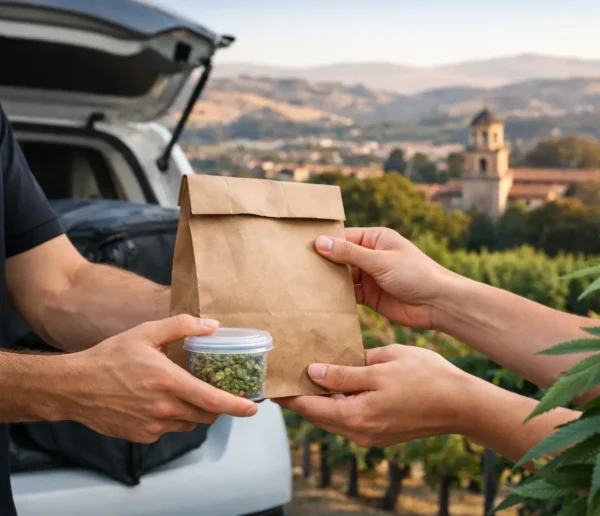
In a spread-out region like North County, the easiest option is not always a storefront visit. Many adults want to order online, confirm that the business is licensed, and have products delivered discreetly to their home, lodging, or other eligible location. That is one reason licensed cannabis delivery has become such a practical fit for the area.
For those customers, the comparison with kratom shops becomes even sharper. A regulated cannabis delivery service is built around verified orders, compliant handling, and a more predictable customer experience. That is very different from buying an unregulated or loosely regulated product and hoping the label tells the full story.
If convenience is part of the decision, Paso Robles Cannabis Delivery Made Simple walks through what local ordering looks like.
Are there any gray areas?
There are always a few. Some kratom sellers may claim strong sourcing practices or third-party testing. Some consumers may also prefer kratom for their own reasons. But that still does not make a kratom shop equivalent to a licensed cannabis dispensary.
The biggest gray area is consumer perception. People often assume that if a product is sold openly, it must be held to the same standards as cannabis sold through California’s legal market. That assumption can lead to bad decisions.
The safer mindset is to separate the two categories completely. One is part of a regulated state cannabis system with licensing, testing, and enforcement. The other may have far more variation from seller to seller.
What to look for if you want legal, reliable cannabis access
If your goal is dependable cannabis shopping, focus on the basics. Make sure the business is licensed. Expect age verification. Look for clear product information. Choose providers that explain their process instead of making vague claims. And if privacy matters to you, pay attention to how the company handles ordering, packaging, and delivery.
That is where a trusted local service stands out. For adults in Paso Robles and surrounding communities, a compliant delivery model offers something many shoppers actually want more than a flashy retail experience: simplicity. You can browse online, place an order, verify your information, and receive products discreetly from a licensed source.
Kratom shops and cannabis dispensaries may get mentioned in the same conversation, but they are not the same type of business, and they do not offer the same level of consumer protection. If you care about tested products, legal access, and a process that is straightforward from start to finish, the licensed cannabis side gives you a much firmer ground to stand on.