That forgotten gummy pouch in the back of a drawer may still look fine, but looks are not the whole story. Do edibles expire? Yes. Like any food product, cannabis edibles can lose freshness, change in potency, or become unsafe to eat over time. The right answer depends on what kind of edible it is, how it was packaged, and where you stored it.
For most adults, the easiest rule is this: treat cannabis edibles like the food they are. A shelf-stable mint has a very different lifespan than a chocolate bar, baked cookie, refrigerated beverage, or cannabis-infused butter. Check the package date, use your senses, and do not gamble with anything that seems questionable.
Do Edibles Expire or Just Lose Potency?
Both can happen, but they are separate issues. The food ingredients in an edible may spoil before the cannabis compounds noticeably break down. In other cases, an edible can remain safe enough to eat while its flavor, texture, or effects are no longer what the label promised.
THC, CBD, and other cannabinoids gradually degrade when exposed to heat, light, oxygen, and moisture. That does not usually happen overnight. Still, an old edible stored in a hot car, sunny kitchen, or humid bathroom cabinet may not deliver the same predictable experience as a properly stored product.
The date on the package is generally a quality guide, not a guarantee that the product instantly becomes bad the next day. A “best by” date usually points to the period when the manufacturer expects the product to taste, feel, and perform as intended. A “use by” date deserves more caution, especially for products made with dairy, fruit fillings, or other perishable ingredients.
If the edible is well past its date, the safest choice is to replace it. Cannabis products are meant to be enjoyable and consistent. Saving a few dollars is not worth eating food that may have spoiled or taking an unpredictable dose.
How Long Different Edibles Usually Last
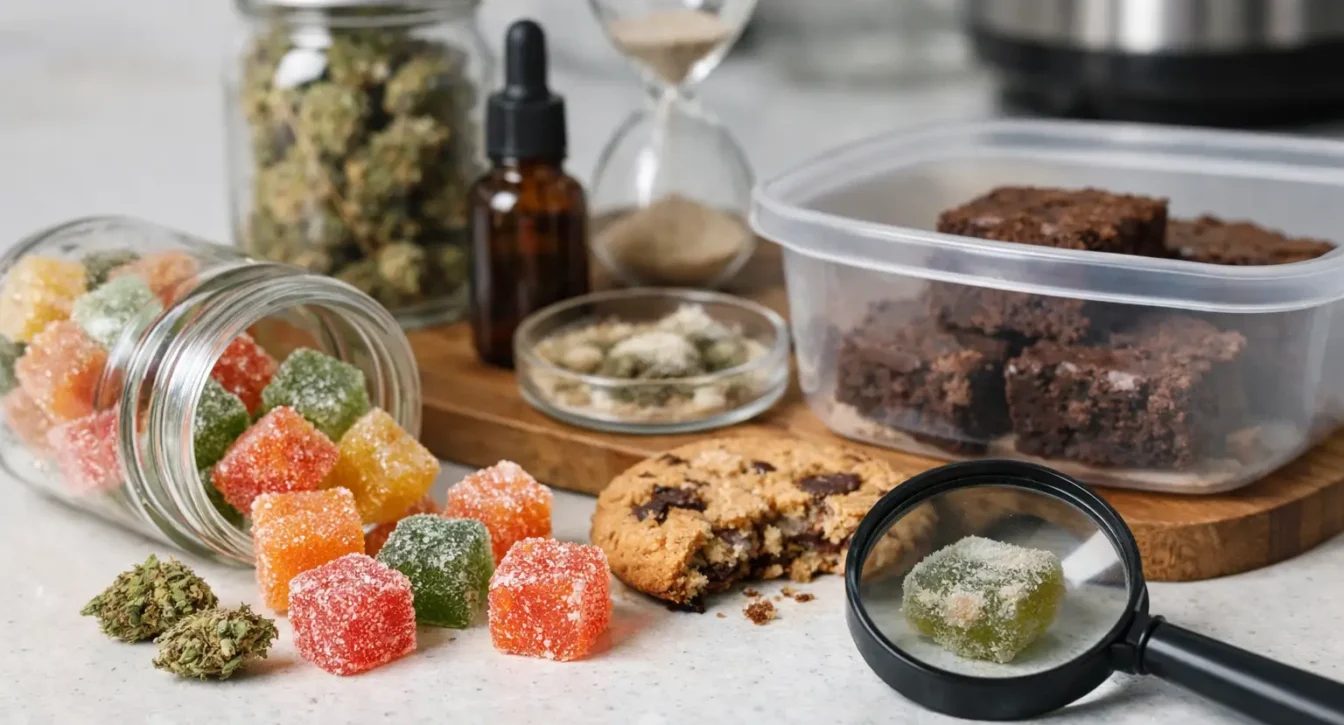
The ingredient list matters as much as the cannabis. Hard candies, lozenges, mints, and sealed gummies are often among the longest-lasting options because they contain little moisture and are usually packaged to limit air exposure. They can often hold quality for many months when sealed and stored in a cool, dark place.
Chocolate can last a while, but warmth is its enemy. A chocolate edible may develop a pale or white film called bloom when it experiences temperature changes. Bloom can look unappetizing, but it is not always a safety concern by itself. If the chocolate smells rancid, has mold, or tastes distinctly off, discard it.
Baked goods tend to have a shorter window. Cookies, brownies, and similar treats can dry out, go stale, or grow mold depending on moisture content and storage. Products with cream, dairy, frosting, or fruit fillings need even more attention. Follow the package instructions and refrigerate or freeze them when directed.
Cannabis beverages may have a clear expiration date because their ingredients, emulsions, and flavor systems can change over time. Once opened, most drinks should be refrigerated and used promptly, just as you would with any other beverage.
Infused butter, cooking oil, sauces, and homemade edibles require extra care. Their shelf life varies widely based on the base ingredient and whether they were handled and stored properly. If you did not make it yourself or cannot confirm when it was prepared, do not assume it is still good.
Signs an Edible Should Be Thrown Away
A package date gives you useful context, but the condition of the product matters too. Do not consume an edible if you notice mold, an unusual smell, sliminess, leaking, swelling packaging, or a major color change that cannot be explained by normal chocolate bloom.
Texture can also tell you a lot. Gummies that have become very hard or dried out may simply be stale, while gummies that are unusually wet, sticky, or fermented-smelling should be discarded. A baked edible with visible spots, fuzz, or a damp and strange interior belongs in the trash.
Be cautious with packaging that is torn, unsealed, or damaged. Cannabis products should arrive in compliant, child-resistant packaging, but once that seal is compromised, air and moisture can speed up quality loss. If a package has been open for months and you do not remember how it was stored, replacing it is the more dependable move.
One detail people sometimes miss: a product can look normal and still be past its best. An edible that has been exposed to heat may have unevenly melted and re-solidified. That can affect texture and, in some cases, how evenly the ingredients are distributed. When you cannot trust the product’s condition, do not try to guess your way through the dose.
Store Edibles for Freshness and More Predictable Effects
A cool, dark, dry place is the best starting point for most sealed shelf-stable edibles. A cabinet away from the stove, direct sun, and appliances that generate heat is usually better than a car, garage, or windowsill. High heat is especially rough on gummies, chocolate, and cannabinoid quality.
Keep products in their original packaging whenever possible. The label gives you the dosage, expiration information, ingredients, and storage instructions. Original child-resistant packaging also helps prevent mix-ups with regular candy or snacks.
Refrigerate products that say to refrigerate, as well as many perishable baked goods, drinks, and infused ingredients after opening. If you need to store a baked edible longer, freezing can help preserve it. Wrap it securely, label it clearly as cannabis, and keep it completely separate from everyday food where children, guests, or pets could mistake it for a regular treat.
Avoid frequent temperature swings. Moving chocolate from a warm car to a cold refrigerator and back again can damage the texture quickly. The same goes for gummies left in a hot bag during a North County afternoon. If you are traveling or staying in a hotel, keep your edibles secured indoors and out of direct sunlight.
What About Old Edibles That Still Seem Fine?
If a sealed, shelf-stable edible is only slightly past its best-by date, stored properly, and shows no signs of damage or spoilage, it may not be automatically unsafe. But the experience can be less reliable. Flavor may fade, gummies can harden, and the effects may be weaker or different than expected.
That uncertainty matters most for medical patients and anyone who relies on a consistent dose. If you use a product for sleep, pain support, relaxation, or another specific purpose, an old edible may not be the best time to experiment. A fresh, accurately labeled product gives you a clearer starting point.
Never try to compensate for age by taking more than your normal amount. Edibles can take time to take effect, and increasing a dose too quickly is one of the most common ways people end up having an uncomfortable experience. Start with the labeled serving, wait patiently, and keep your setting calm and comfortable.
A Quick Check Before You Eat
Before opening an older edible, look at the date and storage instructions on the package. Check whether the seal is intact, then inspect the food for changes in smell, texture, color, or visible mold. If it contains dairy, fruit, baked ingredients, or was meant to be refrigerated, be more conservative.
When in doubt, throw it out. Fresh edibles are easier to dose, better tasting, and more likely to provide the reliable experience you wanted in the first place. For adults 21+ and qualified medical patients, a properly stored, clearly labeled product is always the easier way to relax with confidence.