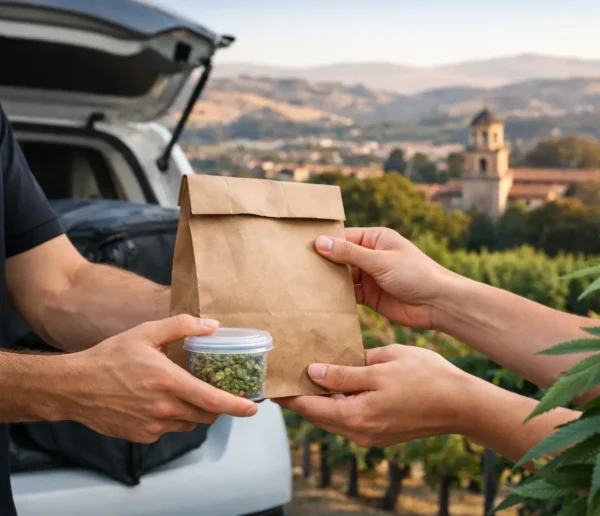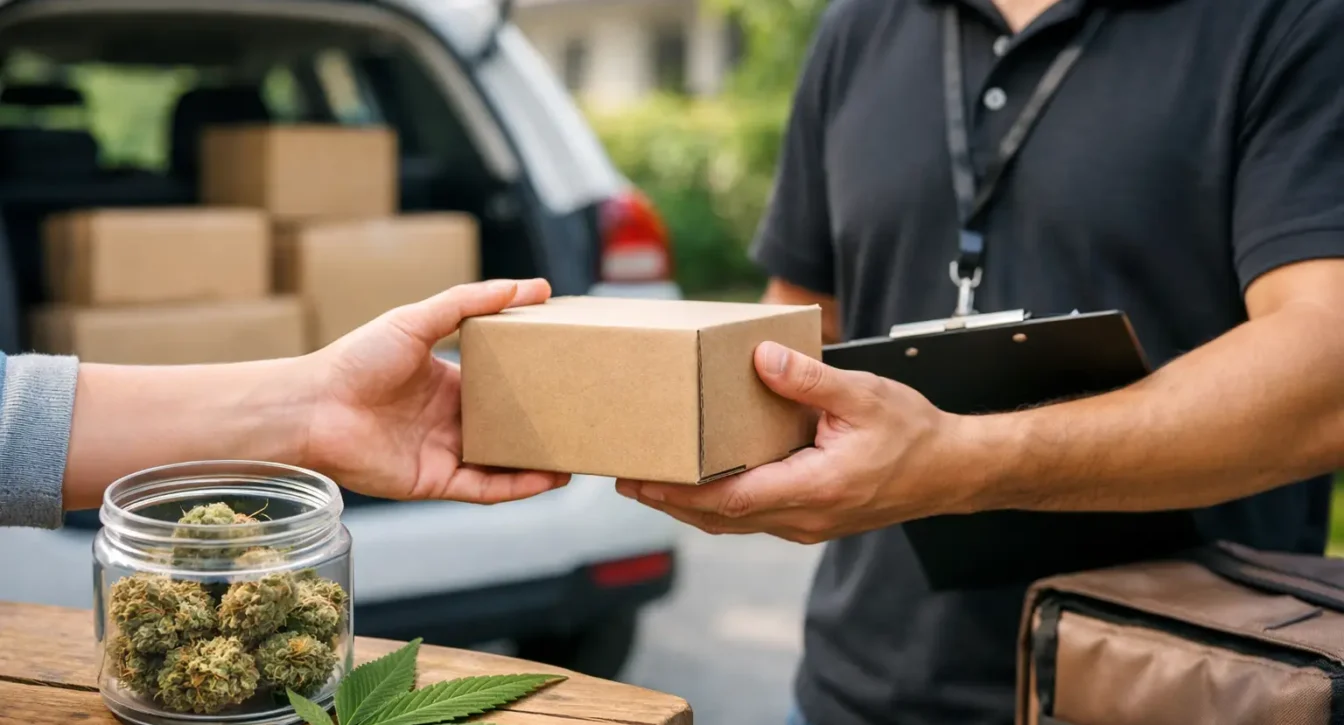
Ordering cannabis to your door feels simple when everything goes right. The reason it works is not luck – it is a system built around ID checks, delivery procedures, product limits, and local compliance. If you have ever wondered about cannabis delivery rules explained in plain English, this is the practical version.
For most customers, the big questions are straightforward. Can you order where you are staying? Do you need to be home? What kind of ID is accepted? How much can be delivered at once? The answers depend on whether you are ordering as an adult-use customer or as a medical patient, and whether the delivery service is operating the right way in the first place.
Cannabis delivery rules explained for real customers
In California, legal cannabis delivery is available to adults 21 and older. Medical patients can usually order at 18 and older if they have a valid physician’s recommendation or qualifying documentation. That age difference matters because it changes who can legally receive an order and what purchasing options may be available.
The next rule is identity verification. A licensed delivery service is not supposed to treat cannabis like a takeout order left at the doorstep. The person receiving the order generally needs to show a valid government-issued ID, and the information needs to match the order. That is one of the biggest differences between legal cannabis delivery and unlicensed operators that cut corners.
This is also where discretion and compliance work together. A good delivery process should feel easy for the customer, but there is still a legal handoff taking place. If a driver asks to verify your age and identity, that is not a hassle for the sake of it. It is part of keeping the transaction legal and protecting both the customer and the business.
Who can receive a cannabis delivery?
In most cases, only the customer who placed the order should receive it. You generally cannot send someone else to meet the driver unless the service has a compliant process for that situation, and many do not allow it at all. If the name on the order and the ID do not match, the driver may have to cancel the handoff.
That can surprise people staying with friends or traveling through the area. If you are at a hotel, motel, RV park, or campground, the safer move is to place the order under your own name and be ready to meet the driver yourself. Legal delivery is built around verified delivery to a verified adult or qualified patient, not just delivery to an address.
There is also a practical point here. Even when a location is eligible, the driver still needs a lawful, safe way to complete the delivery. Some properties have front desk rules, gate access issues, or no-delivery policies of their own. That does not always mean you cannot receive an order, but it may mean meeting outside, at a designated entrance, or in another approved spot.
Where cannabis can and cannot be delivered
A lot of customers assume the rule is simple: if you can pin the address, delivery is allowed. It is not always that clean.
Licensed cannabis delivery can often reach private residences and many temporary accommodations, but the details matter. The delivery service has to operate under California rules and within its permitted service model. Certain locations may be harder to serve because of property rules, restricted access, or safety concerns. Some services also set their own boundaries based on route coverage, timing, and staffing.
Public places are where confusion shows up fast. A parking lot, park, roadside turnout, or random street corner may sound convenient, but that does not make it a good or compliant delivery point. The delivery needs to happen in a way that allows proper identity verification and lawful possession. If a driver declines a vague meetup request, that is usually a sign the company is taking compliance seriously.
For local customers in North County, this is one reason hyperlocal delivery matters. A service that knows the area, understands common access issues, and communicates clearly about where handoff can happen is usually much easier to work with than a generic operator trying to cover too much ground.
What IDs and documents are usually required
For adult-use orders, a valid government-issued photo ID is the standard. That usually means a driver’s license, state ID, passport, or another accepted official identification document. The key is that it must prove your age and identity clearly.
For medical orders, you may need more than just photo ID. Depending on the transaction and the service, a valid physician’s recommendation or medical cannabis card may be relevant. Medical status can matter for age eligibility, tax treatment, possession allowances, and access to certain product categories.
This is one area where customers sometimes leave money on the table. If you qualify as a medical patient, having the right documentation can make ordering more flexible and potentially more cost-effective. It may also open the door to higher legal limits and more specialized products, especially for customers looking for high-CBD options.
Purchase limits are real, even if the menu is bigger
One of the most misunderstood parts of cannabis delivery is quantity. Just because a website shows a full menu does not mean you can add unlimited products to your cart.
California law sets limits on how much cannabis an adult-use customer can purchase and possess at one time. Medical patients may have different limits depending on their status and documentation. Those limits can apply across flower, concentrates, edibles, and other product types, which is why a cart that looks normal at first glance may need to be adjusted before checkout is approved.
This is not always intuitive, because product categories do not compare evenly. A customer might think in terms of package count, while compliance rules focus on total cannabis amounts or product type thresholds. That is why a compliant delivery service may flag an order, split it differently, or tell you a certain combination goes over the legal limit.
If that happens, it is not arbitrary. It is part of staying within the law and avoiding problems for the customer down the line.
Why legal delivery does not work like food delivery
People are used to drop-off culture. Leave it at the door, text me when you arrive, and keep it moving. Cannabis delivery is different.
A licensed service usually needs direct handoff and ID verification at the time of delivery. Drivers are not there to guess who the customer is or leave a cannabis package unattended. That protects against underage access, mistaken delivery, and failed verification.
There is also a timing factor. Because cannabis deliveries involve compliance steps, customers should expect a little more structure than they would from a pizza order. You may get updates, arrival windows, or instructions about being available with your ID ready. The process should still feel convenient, but convenience does not erase the legal requirements.
That is also why discretion matters. A professional service can be both low-key and strict about procedure. Those two things are not opposites. In fact, they usually go together.
How to tell if a cannabis delivery service is following the rules
The easiest sign is communication. A compliant company will be clear about age requirements, ID checks, delivery areas, and how the handoff works. If a service acts vague about verification or seems willing to leave cannabis anywhere with no questions asked, that is a red flag.
You should also expect a real ordering process, not a casual text thread with no structure. Licensed operators tend to explain what is needed before delivery, what payment methods are accepted, and what happens if the recipient cannot be verified. That clarity is part of good customer care.
For customers in Paso Robles and surrounding communities, that kind of professionalism matters just as much as speed. Fast delivery is great. Fast, discreet, and compliant is what makes the experience dependable.
The part customers control most
The smoothest delivery usually comes down to a few basics. Order under your own name, use a valid ID, choose a location where you can legally and practically meet the driver, and be available during the delivery window. If you are a medical patient, keep your documentation current and ready if needed.
That may not sound exciting, but it is what keeps the process easy. Most problems happen when a customer is unavailable, the ID does not match, the location is unclear, or the order goes past legal limits.
A reliable service should help you avoid those issues before they become problems. That is the difference between a stressful order and one that feels simple from checkout to doorstep.
The easiest way to think about cannabis delivery rules is this: the best service is not the one that ignores the rules. It is the one that follows them so well that your order still feels effortless.