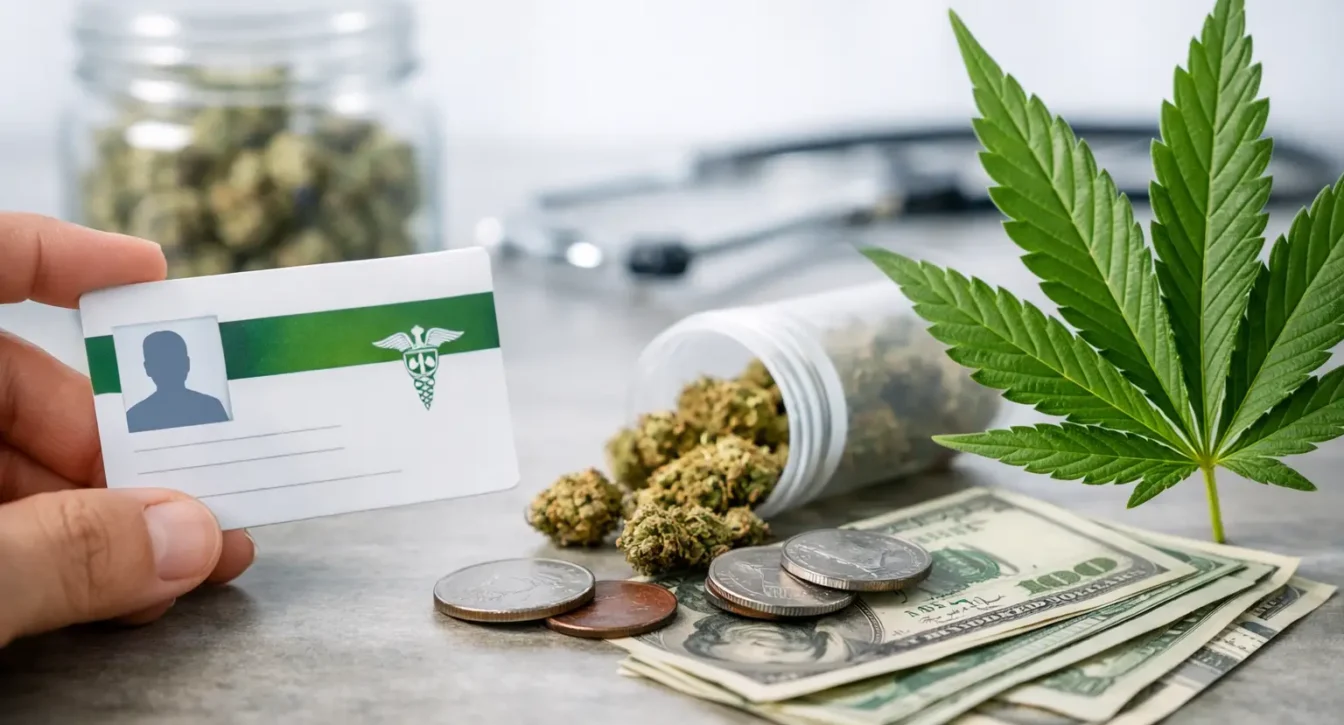
Sticker shock usually hits at checkout, not while you’re filling your cart. That’s why a medical cannabis card savings guide matters for California shoppers who buy regularly and want a clearer picture of what actually lowers the total.
For many adults, the difference between shopping as a recreational customer and shopping as a qualified medical patient is not small. It can affect taxes, possession limits, access to certain products, and how practical your monthly cannabis budget feels. If you use cannabis often for sleep, pain, anxiety, appetite, or recovery, a medical card can move from “maybe later” to “why didn’t I do this sooner?”
What this medical cannabis card savings guide actually covers
A lot of people hear “medical card” and think only about legal permission. In reality, the savings side is often the main reason patients look into it. This medical cannabis card savings guide focuses on the areas where a card may reduce costs and where the numbers depend on your shopping habits.
The biggest financial factor in California is taxes. Qualified medical patients with a valid Medical Marijuana Identification Card, often called an MMIC, may be exempt from state sales tax on medical cannabis purchases. That does not mean every tax disappears, and local rules still matter, but even one tax exemption can add up fast if you order often.
There’s also the less obvious savings: patients may have access to stronger value over time because they can buy in ways that fit their actual needs. If you need larger quantities, more specialized products, or consistent reorders, the card can make those purchases simpler and sometimes more economical.
Where the savings usually show up
The easiest place to understand savings is at the register. If you’re a recreational customer, your total can climb quickly once taxes are added. If you qualify as a medical patient and have the right documentation, that tax burden may be lower depending on the type of card you hold and the rules that apply to the transaction.
That matters most for repeat buyers. Someone who orders once in a while may notice a modest difference. Someone who buys flower every week, keeps edibles on hand for sleep, or regularly picks up tinctures or CBD-heavy products may see meaningful monthly savings.
The second place savings show up is in purchase flexibility. Medical patients may qualify for higher possession and purchase limits than adult-use customers. If you know what works for you and prefer fewer, larger orders, that can reduce the hassle of multiple purchases and help you shop more intentionally.
The third area is product access. Some medical consumers look for high-dose products or formulations aimed at more specific symptom support. If a card gives you access to products that better match your routine, there’s value in that too. Saving money is one thing. Spending smarter on products you’ll actually use is another.
The tax question: where people save the most
Let’s keep this simple. In California, adult-use cannabis purchases can include several layers of taxation. Medical patients with a physician’s recommendation may qualify to buy medical cannabis, but the larger tax advantage is generally tied to having the state-issued MMIC, not just any recommendation on its own.
That distinction matters. Some shoppers assume that once they have a doctor’s recommendation, they automatically receive every available tax break. Often, they do not. If your goal is maximum savings, you need to understand whether your documentation qualifies you for state sales tax exemption or simply confirms medical eligibility.
This is where “it depends” becomes important. Local cannabis taxes, pricing structure, and retailer processes all affect your total. So the right question is not “Does a card save money?” The better question is “How much do I buy, what kind of card do I have, and how often will the tax difference show up?”
If your cannabis spending is occasional, the savings may take longer to justify the cost and effort of getting the card. If cannabis is part of your weekly routine, the math tends to look a lot better.
When a medical card makes the most financial sense
A medical card often makes the most sense for people who buy consistently, not casually. If you use cannabis a few times a month for relaxation, a card may still help, but the savings may be limited. If you rely on cannabis several times a week for a health-related reason, the economics can shift quickly.
That includes patients who prefer non-intoxicating or lower-THC options. High-CBD tinctures, capsules, topicals, and balanced products can become routine wellness purchases. Routine is where savings compounds.
Age can also matter. In California, adult-use customers must be 21 or older, while medical patients can be 18 or older with a valid recommendation. For younger adults with legitimate medical needs, a card is not just about savings. It may be the legal path that makes access possible in the first place.
Medical cannabis card savings guide: costs vs. payoff
A fair guide has to talk about the upfront cost. Getting a recommendation or state card is not free. Depending on the provider and the type of documentation you pursue, there may be application fees, appointment fees, and renewal costs.
So the smart move is to compare that cost against your likely annual savings. If your average cannabis spend is low, the break-even point may take a while. If your average spend is higher, especially across monthly purchases, the savings may cover the card cost faster than expected.
Think of it in plain terms. If a card helps reduce taxes on repeated orders throughout the year, you are not chasing a one-time discount. You are lowering your baseline cost of access. That’s a different kind of value because it keeps working every time you reorder.
Savings are not only about taxes
People often focus on tax savings because it is easy to calculate. But there are practical savings too.
With higher purchase limits, patients may be able to order in larger quantities when that fits their budget. That can help avoid extra trips, rushed reorders, or paying premium pricing on small emergency purchases. For delivery customers, especially those who value convenience and discretion, fewer purchases can simply make life easier.
There’s also less trial-and-error if you can access products better suited to your medical goals. Buying the wrong edible strength or a product that does not match your tolerance is a quiet budget drain. Better access can lead to better repeat choices.
A few trade-offs to keep in mind
A medical card is useful, but it is not a magic coupon. Rules vary, renewals are part of the process, and not every shopper needs one.
Some people prefer the simplicity of shopping as an adult-use customer and are fine paying the higher total for occasional convenience. Others want every legal and financial advantage available because they buy often enough for it to matter. Neither approach is wrong.
Privacy is another common concern. Many customers want the process to stay straightforward and discreet. Working with licensed, compliant businesses helps, because patient verification and delivery procedures should be handled professionally and clearly.
How to decide if it’s worth it for you
Start with your real spending, not your guess. Look at what you typically spend in a month and how often you reorder. Then ask three practical questions: do you buy often, do you use cannabis for a genuine medical reason, and would lower taxes or higher limits change how you shop?
If the answer to all three is yes, a medical card deserves a serious look. If only one of those is true, the benefit may be smaller.
For customers in places like Paso Robles or Atascadero who want delivery rather than a store visit, this can be especially relevant. Regular buyers often care less about browsing and more about dependable access, clean pricing, and getting what they need without extra friction. That’s where understanding the savings ahead of time helps.
The bottom line on a medical cannabis card savings guide
The strongest case for a card is simple: regular medical use plus repeat purchases usually makes savings more meaningful over time. The biggest benefit is often tax-related, but better limits, better product access, and fewer purchasing headaches can matter just as much.
If you’re a light, occasional buyer, the payoff may be modest. If cannabis is part of your weekly routine, the card may be one of the few legal tools that actually improves both access and affordability. For many California shoppers, that’s the difference between a high checkout total that feels random and a plan that makes sense.
A little paperwork is annoying. Paying more than you need to, over and over again, is usually worse.